We all know that children can get understandably worried or scared when they need a dental procedure such as a root canal, extraction, or oral surgery. Today, we have a way to make the experience better.
There are different sedation techniques that can be used to calm dental patients before and during in-office treatment, or to make them more comfortable for longer procedures. Dental sedation is different from pain management. The latter involves shots and numbing agents. But if the idea of getting a numbing shot frightens your child, then dental sedation can help relax and take your child's mind off the treatment process.
Depending on your level of dental anxiety, Dr. Michele Simpson may recommend one of the following types of dental sedation.
Book Now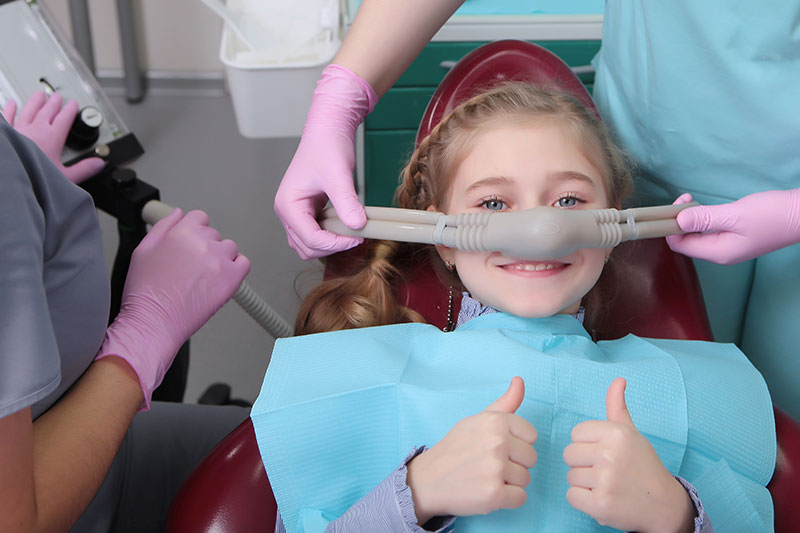
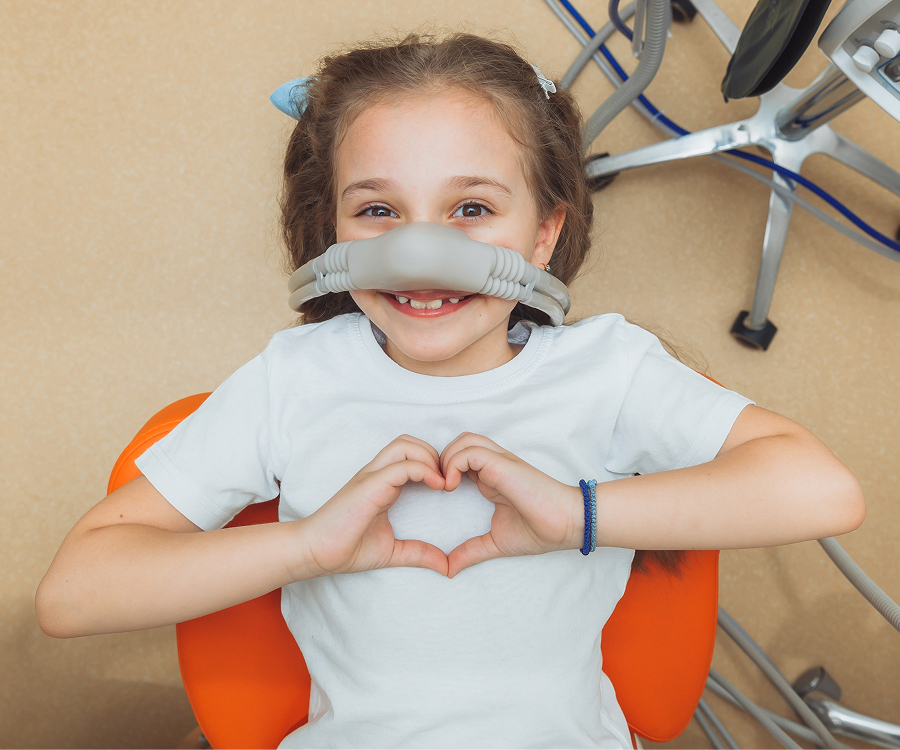
Laughing gas, mixed with oxygen, creates a relaxing effect but does not cause the child to fall asleep. Children may feel lightheaded, experience a floating sensation, and have a happier mood. Laughing gas relaxes an anxious child, and takes the edge off so he, or she, is calmer during the dental procedure.
Laughing gas eliminates a sense of time to help children, with short attention spans, during extensive dental treatment. They will not be as anxious or feel the need to move around.
Laughing gas can be easily controlled. The dentist, or a dental assistant, can adjust the amount of gas the child needs. Because laughing gas wears off so quickly, the side effects are low. The child breathes oxygen for a few minutes at the end of treatment so that all the laughing gas leaves their body.
Parents should make sure their child does not have a full stomach as laughing gas can cause nausea and vomiting in a small percentage of kids if they have a big meal before their appointment.
Parents may be wondering if laughing gas actually makes kids laugh. That only happens in a very small percentage of kids.
If your child needs a dental procedure that involves drilling or extractions, you may want to consider laughing gas. Please call our office and make an appointment with the dentist to go over your child’s dental condition and what procedure your child may need. Call us today!
Book Now
Yes. Nitrous oxide is one of the safest and most widely used sedation options in Children's Dentistry. It is non-allergenic, non-irritating, and has an excellent safety record spanning decades. The American Academy of Children's Dentistry endorses its use. Our trained team carefully monitors your child throughout the procedure.
The effects of nitrous oxide wear off almost immediately after the mask is removed. We administer pure oxygen at the end of each appointment to clear any residual gas from the lungs. Most children are fully alert and ready to leave within minutes — there are no lingering grogginess effects, unlike stronger sedation methods.
We recommend a light meal or snack a few hours before the appointment rather than a heavy meal. Eating too much before nitrous oxide administration can occasionally cause nausea. We'll provide specific pre-procedure instructions at the time of scheduling based on your child's age and health history.
No. Nitrous oxide reduces anxiety but does not eliminate pain sensation. Local anesthesia (numbing injections) is still administered to ensure your child feels no physical pain during the procedure. Laughing gas helps your child feel calm and relaxed so that the numbing injection and procedure itself are more easily tolerated.